Tuesday, March 27, 2007

passage fieldfares stop over to feed on the moist pasture.

male lapwing

from -10 windchill to +16 in one week, confusing for us sapiens, it has'nt slowed down nature. With the floods receeding fast revealing the jewel that is the Nene Washes - all waders are currently displaying vigorously. Migrant marsh harriers have arrived in numbers, first avocets have been seen, mallard are already sitting on eggs where only 2 weeks ago the land was under water.

Friday, March 09, 2007

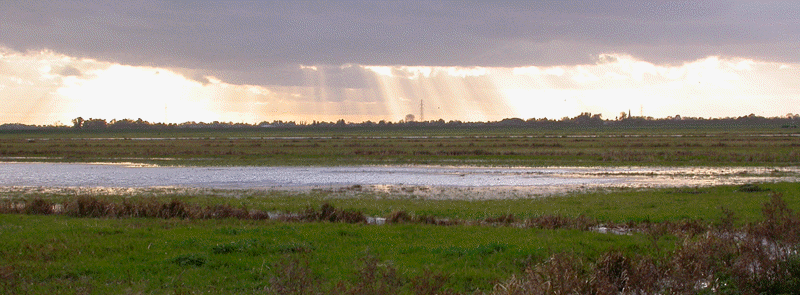
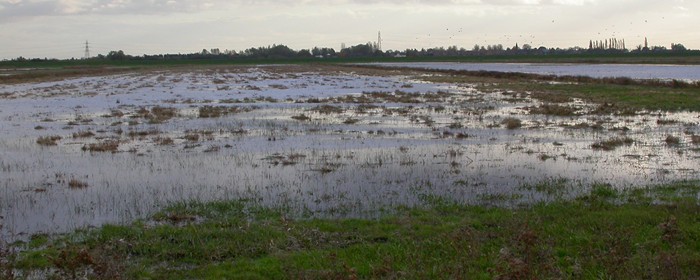
Flooded washland at Lords Holt
following the rain on Friday and sunday and the full moon (creating high tides) the washlands are now operating in their role as flood release mechanism for the Lower river Nene, this protects areas of peterborough and surrounding farmland.
Mole escaping the flood
Gulls feasting on the mass movement of insects, worms and voles

male Shelduck


Sunday, March 04, 2007


Lunar eclipse on Saturday night. I was alerted to this eclipse whilst watching Spanish football at 10:30pm, the camera showed it at half time so I quickly went outside to enjoy it myself. The extent of the eclipse reached approx 9/10'ths, progressively turning fiery orange on its underside.

Saturday, March 03, 2007

Its that time of year again where Merlins can be seen frequently on the Nene Washes. They utilise the drove gateways as perches and can allow close approach when in a tractor or other vehicle. They appear to be hunting the spring arrival of Meadow pipits and Reed Buntings though I have seen them take Dunlin.


Weasal - taken from the truck was investigating rabbit burrows at Eldernell.

Wednesday, January 24, 2007

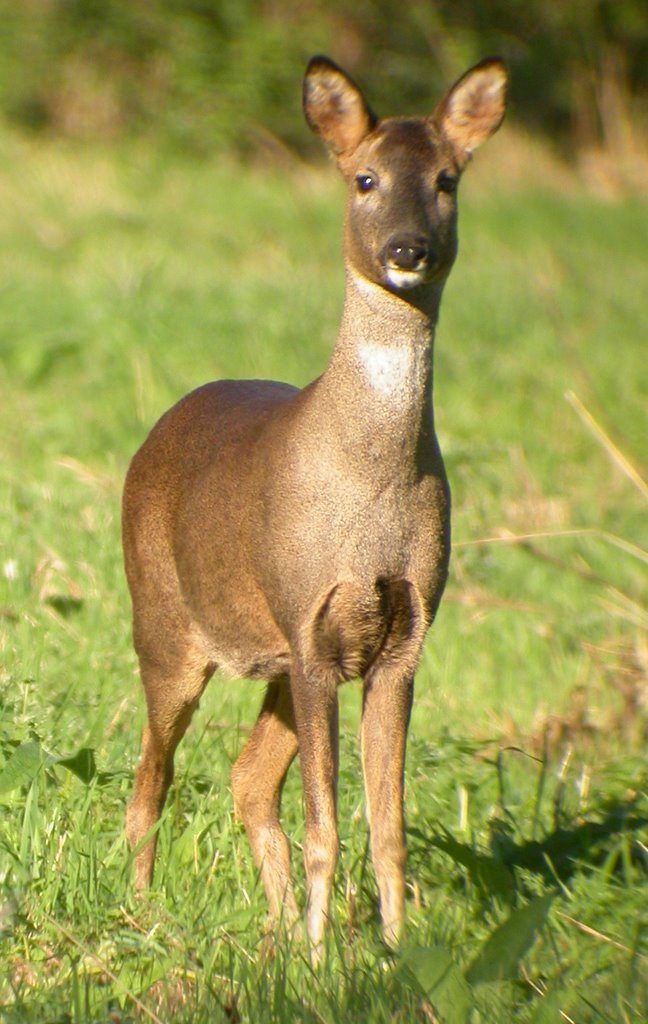
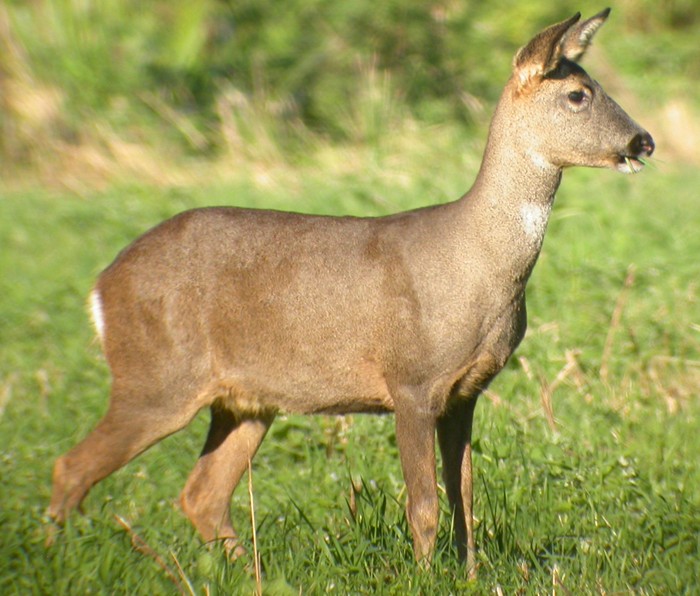
Group of 7 Roe deer, seemingly established on the Washes!
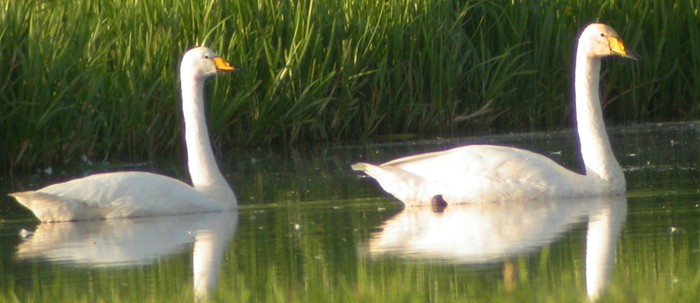
The number of wild swans has increased this week with around 260 Whoopers and 650 Bewick's. 2 of the bewicks had recently been fitted with yellow neck collars in Holland. One was on Texel until Jan 1st, it arrived in the UK on 2nd or 3rd, being seen at Catfield, Norfolk on 3rd and here at the Nene washes on 22nd. Many birds are now feeding on the washland grass particularly at Eldernell, others are feeding on waste potatoes, beet tops or winter wheat.

Monday, January 15, 2007

Water Fern azolla filliculoides. This invasive alien plant species usually sinks to the bottom of the water to over-winter or is killed off by hard frosts. This patch seemed very happy and going by how green it is - actively growing. I wonder if this patch managed to survive the freeze up in December or has it floated to the surface during the recent mild spell and already started reproducing.

Sunday, January 14, 2007

adult peregrine utilising an electricity pylon. If you want altitude in cambridgshire surely the top of a large electricity pylon is the place to be. On a clear day I can easily see 15 miles in the fens so I wonder how far a peregine can see, I guess the nearest meal is far enough!
fieldfare at Eldernel car park

Tuesday, December 19, 2006

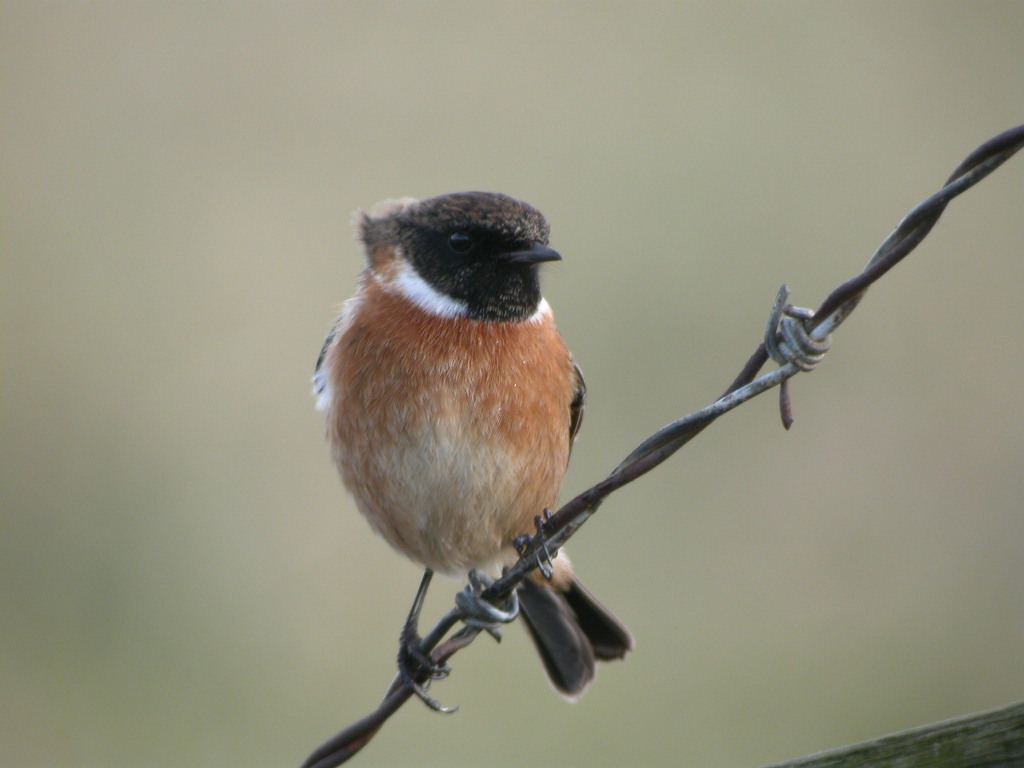
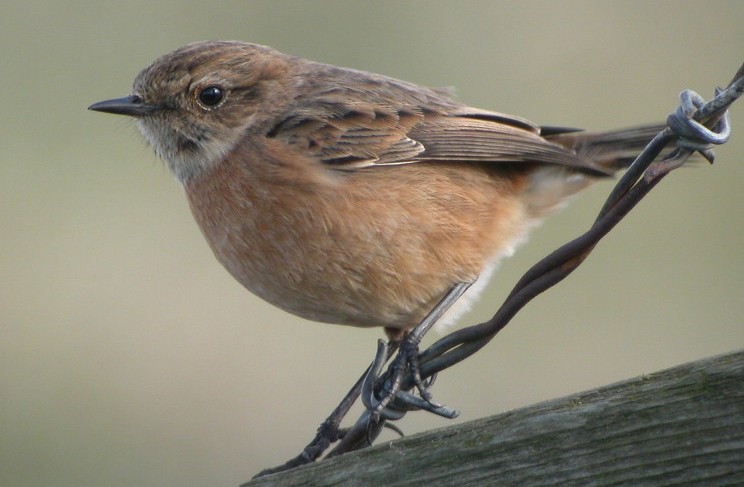
The number of Stonechat on the Nene Washes has reached a minimum of 38, the highest since the major population increase of winter 2001/02 when 47 were counted

Monday, December 18, 2006

This rather ill looking Barn owl was seen on a fence line at March Farmers mid-morning, it did eventually fly a short distance, though i guess its not long for this world. This Kestrel was hunting from horse-back, a new behavioural sighting for me. It returned to the same horse several times, the horse seemed oblivious.
Another sunset west from the south barrier bank at Eldernell

Saturday, December 16, 2006

Bewick's swan - a group flying within 100mtrs of the March Prison wind turbine!?

Friday, December 08, 2006

Bewicks feeding on suger beet tops. This flock of 369 contained 64 juveniles.

One of the swans in the flock has a blue neck collar and was first sighted on the Nene Washes in January 1997, again in January 1998 and January 2000, having been caught in Russia and ringed as a juvenile in 1993 and subsequently caught in 1996 when its neck collar was fitted. Most winters it is sighted on the Ouse Washes but sometimes it spends the whole winter on the continent mainly in Holland.
Whooper swan one main flock of 179 present near march Farmers - again on beet tops.


Thursday, December 07, 2006

This weeks full moon rising over the B1040 pools (known as the town fifties). The high tides that are associated with the twice monthly cycle can cause the Nene to flood providing heavy rain has fallen in the catchment. In spite of the storms in recent weeks we are yet to see such an event.
Icelandic Black-tailed godwits have arrived on the reserve's artificial floods near Eldernell, some 760 are currently present having been displaced, by deep flooding, from the nearby Ouse Washes.


Tuesday, November 14, 2006

Creating Artificial Floods on Nene Washes


We have started creating our annual artificial floods at the eastern end of the Low Wash, viewable from the South Barrier bank west of Eldernell. Good numbers of wigeon are already using them when disturbance is low and 28 whooper swans and 20 Bewicks so far.

Monday, November 06, 2006


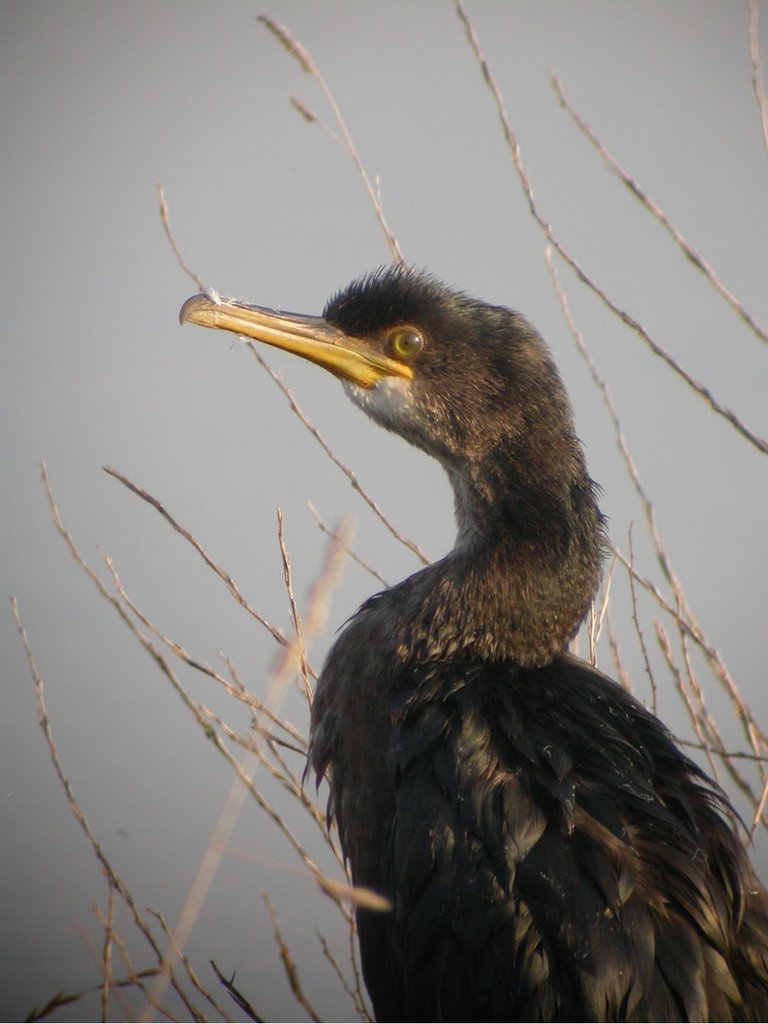
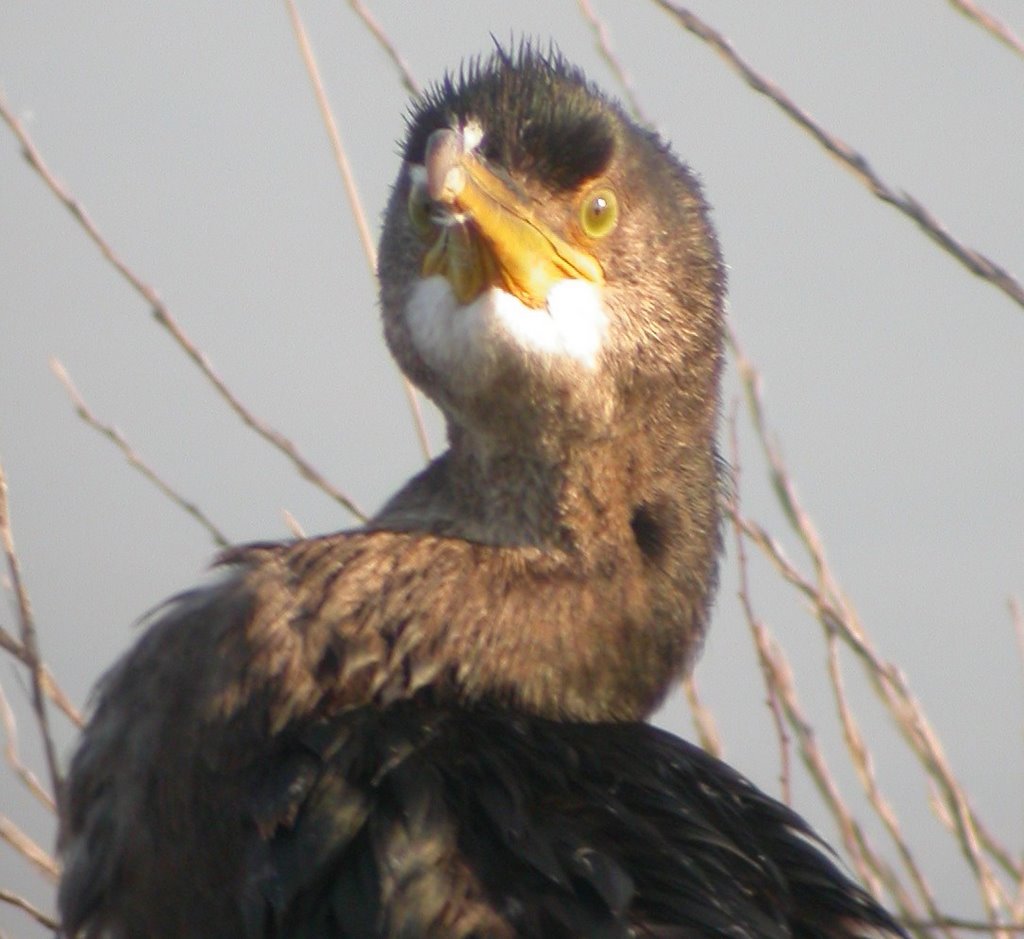
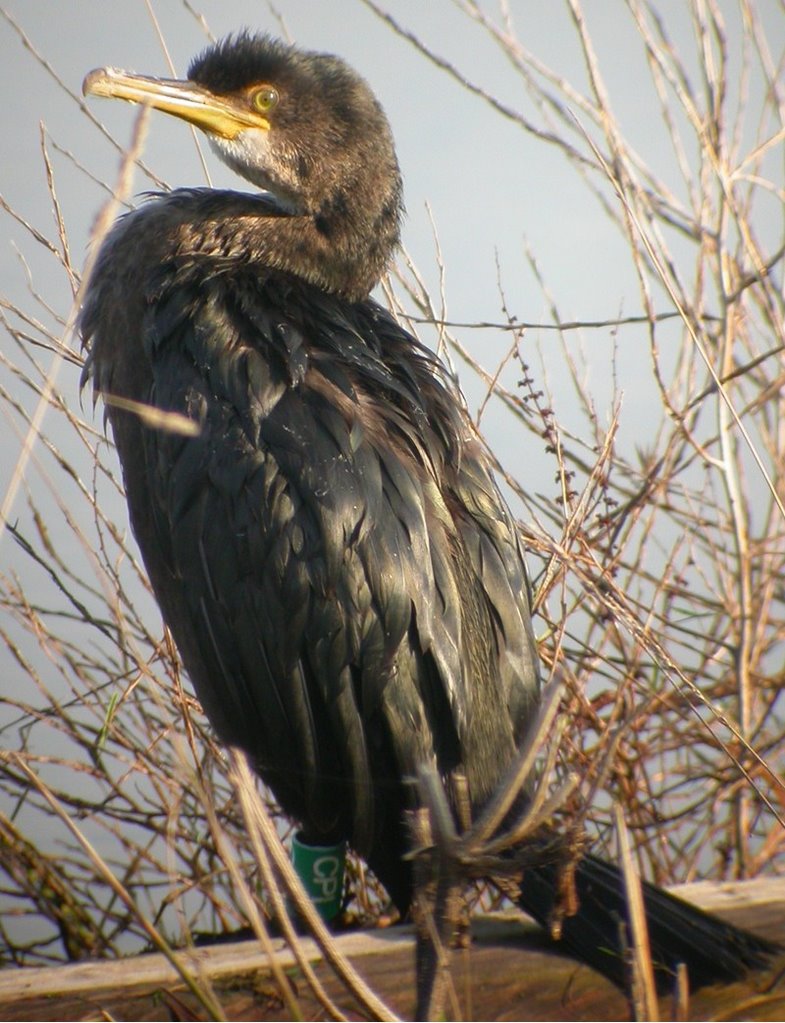
This shag arrived at the Dog in-a Doublet sluice today, it was colour ringed. Thanks to the internet I was quickly able to find the scheme and the man that was studying them. It was ringed on the Isle of May in the firth of Forth Scotland on July 11th 2006.

Sunday, November 05, 2006

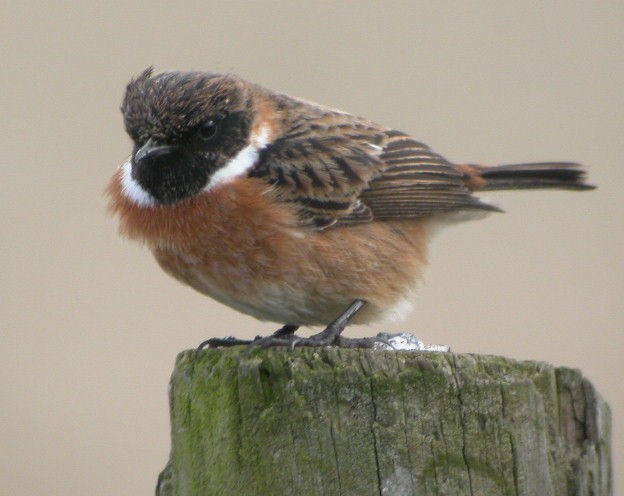
stonechat paradise


Good numbers of stonechat are back on the Nene washes for the winter. No full co-ordinated count made yet but 20+ certainly present. What they find so attractive in the washland habitat are the numerous ditches that are edged with rank vegetation at the interface with short grazed pastures. Most birds are paired up, an essential part of their winter survival, in my opinion, as one bird is always on the look out (a sentinel) whilst its partner seeks out insects and larvae from the decaying ditch-side plants. Their main predators out here are Merlin and Sparrowhawk.
Wednesday, November 01, 2006

Roe deer in Eldernell Decoy wood


A brief walk into the wood at lunch time to escape the biting wind and out popped this Roe deer. With the sun directly behind me I was able to digiscope it before it finally realised I was there, 30 mtrs away. Not a standard wash-land mammal, though it's over 3 years since we flooded and they seem quite at home.
Saturday, October 21, 2006

Friday, October 13, 2006

Whooper swans arriving

Following 13 flying east on tuesday, a group of 3 spent the afternoon resting on our only pool, always a fine site, knowing they've just flown in from Iceland (probably).

Tuesday, October 10, 2006

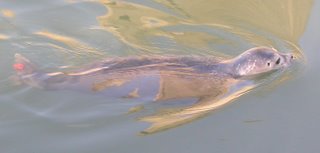
Comparison of Common Seal and recent Grey Seal

This Common Seal from February 2005 shows the distinctive squashed convex nose as opposed to last months Grey seal with its concave "roman" nose. This animal was tagged and was probably the individual rescued 2 years earlier as a pup at the Dog in a Doublet sluice having mis -adventured up the Nene.

last months vagrant Grey Seal - how many other cambs records are there I wonder.
Thursday, October 05, 2006

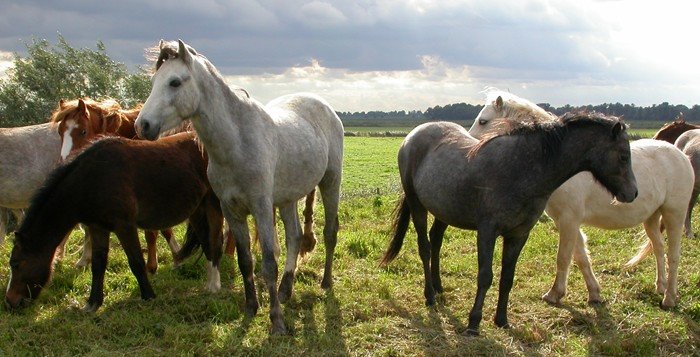
These welsh mountain ponies are a feature of March Farmers, very hardy with distinctly small heads they are really good at eating coarser grass and nibbling at stuff other horses cringe at. Here on the cradge bank they are doing a good job getting it ready for the Wigeon. *(cradge or scradge is an old name for the inner wash bank that is maintained at a lower height than the outer bank to allow for a river in spate to overflow onto the washes.